28 road markings — each with its official statutory code and name from skiltforskriften, English translation and clear plain explanation. The exact data powering the Teorix theory test trainer.
Updated: 2026-09-23
Road markings are defined under the same statutory instrument as traffic signs (skiltforskriften, Chapter 11), and on the theory exam they form part of the official curriculum topic Skilt og oppmerking. The key principle of Norwegian road markings is colour: longitudinal yellow lane separators divide opposing traffic flows. White lines can divide lanes travelling in the same direction or mark the road edge; white edge lines alone do not establish one-way traffic. The line pattern and other road rules determine whether a manoeuvre is permitted.
The second principle is solid versus broken lines: a solid line (sperrelinje) prohibits driving on or across it. With combined lines, follow the nearer line, but a driver already in the oncoming lane may return to the right. A broken line does not remove other restrictions on lane changes or overtaking. A yellow warning line indicates visibility too short for normal overtaking; a white warning line indicates danger when changing lane. In addition, symbols on the asphalt provide critical instructions: stop lines, give-way triangles, lane selection arrows, and pedestrian crossings. Every card below shows an official road marking element with its exact statutory meaning. For an in-depth breakdown of line colours and legal norms, see our guide «Road markings: yellow vs white».
Entries in this study catalogue 28 in catalogue
1000
Kjørefeltlinje
Lane line
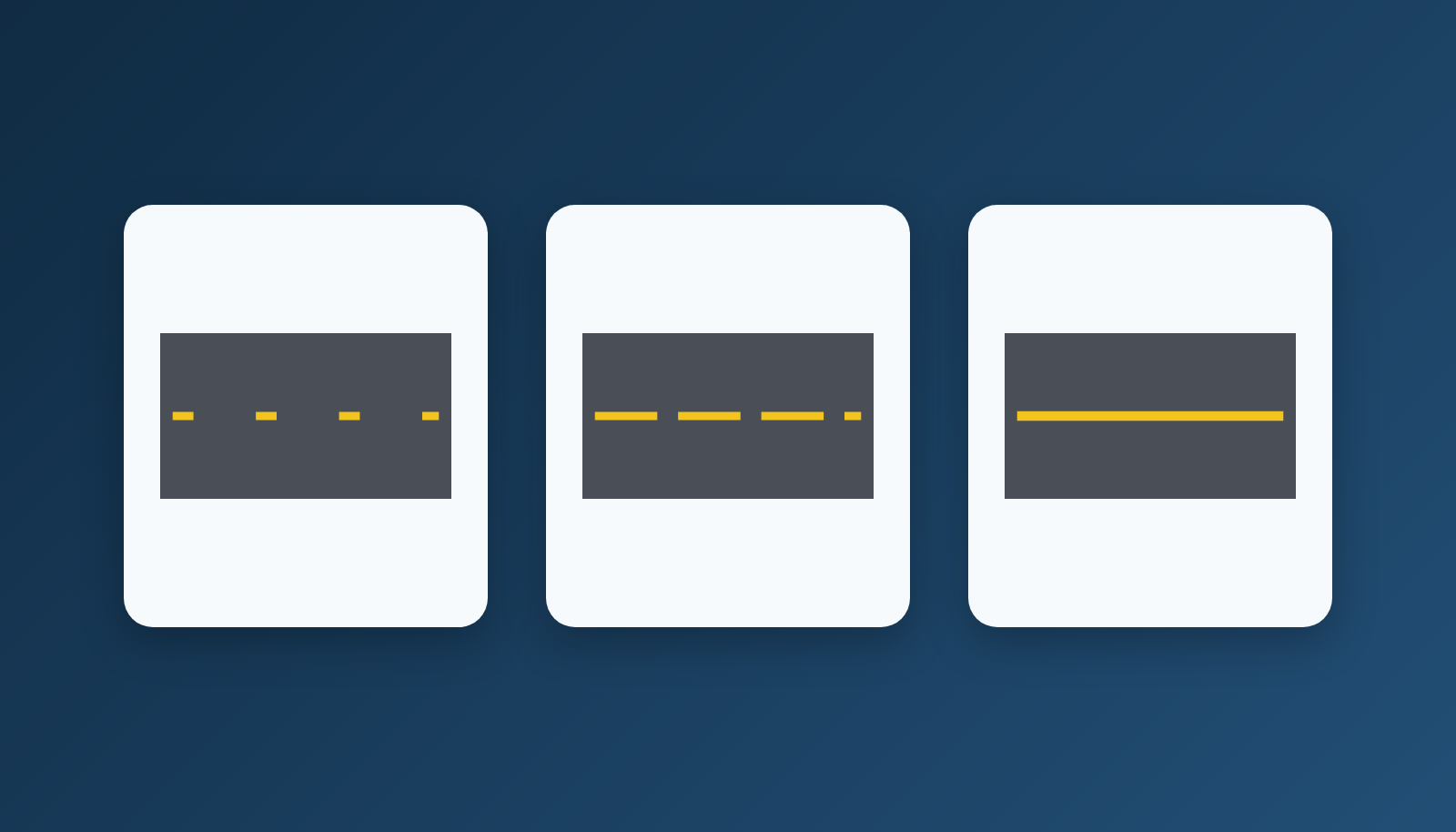
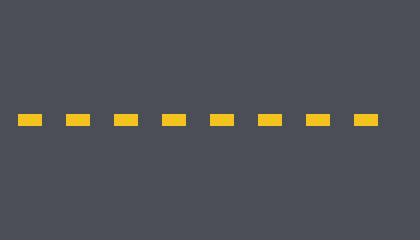
Kjørefeltlinje is the broken line between lanes, and it may be crossed when the lane change is made in accordance with the traffic rules.
1002
Varsellinje
Warning line
A yellow varsellinje means the view ahead is too short for a normal overtaking, while a white varsellinje warns that changing lane is hazardous.
1004
Sperrelinje
Barrier line
Sperrelinje is a solid line separating lanes: you must not drive on or across it, and never to the left of a yellow sperrelinje.
1006
Kombinerte linjer
Combined lines
Where a varsellinje and a sperrelinje run side by side, the line nearest you applies, but a driver who has already moved into the oncoming lane may still return to the right-hand side.
1008
Skillelinje
Dividing line
Skillelinje separates an ordinary lane from a lane for special use, such as kollektivfelt, sambruksfelt, tungtrafikkfelt, sykkelfelt or an acceleration/deceleration lane.
1010
Ledelinje
Guide line
Ledelinje shows how the lane or the turning movement is guided through a junction.
1012
Kantlinje
Edge line
Kantlinje marks the outer edge of the kjørebane (carriageway) — where the carriageway ends.
1014
Sperreområde
Closed area
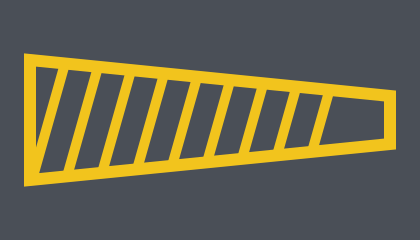
You must not drive on a sperreområde bounded by a solid line, and two parallel sperrelinjer no more than 100 cm apart with milling between them also count as a sperreområde.
1020
Stopplinje
Stop line
Stopplinje shows where the vehicle must stop when an official traffic sign or a light signal requires stopping.
1022
Vikelinje
Give way line
Vikelinje shows the point at which your vikeplikt (duty to give way) takes effect.
1024
Gangfelt
Pedestrian crossing
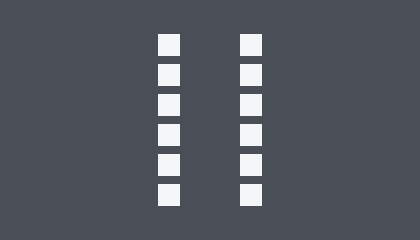
A marked gangfelt counts as a pedestrian crossing even if sign 516 «Gangfelt» has not been put up: give way to pedestrians in the crossing or stepping into it (trafikkreglene § 9).
1026
Sykkelkryssing
Bicycle crossing
Sykkelkryssing marks the place where cyclists and riders of a liten elektrisk motorvogn cross the carriageway.
1027
Fartshump
Speed bump
Painted on the physical speed hump (fartshump) itself, making it visible from a distance. It has no regulating effect of its own — it only warns of the hump.
1028
Parkeringsfelt
Parking lane
A parked vehicle must stand inside the marked parkeringsfelt, though an electric or hydrogen-powered vehicle may park across the bay if all wheels are inside it and the overhang is no more than 40 cm on each side.
1034
Piler
Arrows
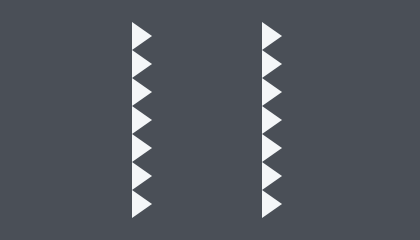
Arrows in the lane ahead of a junction show which directions the lane is to be used for; where the lane is bounded by a sperrelinje the direction is mandatory, and slanted arrows warn that the lane is ending.
1036
Vikesymbol
Give way symbol
The vikeplikt triangle on the road surface gives advance warning of the give-way duty signed with 202 «Vikeplikt»; it is normally painted 50–100 m before the vikelinje.
1037
Gangsymbol
Pedestrian symbol
Shows pedestrians where they belong: it supplements signs 518 «Gangveg» and 522 «Gang- og sykkelveg», and is also used on footways adjoining a cycle path.
1038
Delesymbol
Division symbol
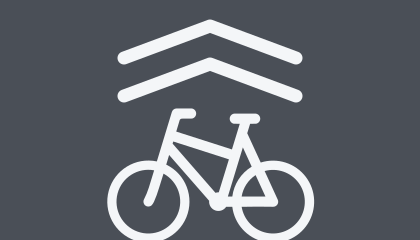
A «sharrow» — a bicycle with chevrons above it — showing that cyclists and cars share the lane. It links cycle routes over short stretches with no dedicated cycling infrastructure, at 30–40 km/h speed limits.
1039
Sykkelsymbol
Bicycle symbol
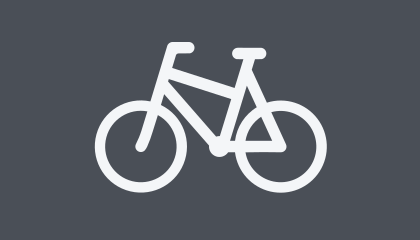
Sykkelsymbol marks a sykkelfelt (cycle lane): where the symbol is painted, the lane is for cyclists and small electric vehicles, and stopping in it is banned (trafikkreglene §§ 4 and 17).
1040
Parkeringssymbol
Parking symbol
The P painted on the surface marks parking bays signed with 552 «Parkering» and parking areas in a gatetun. It has no regulating effect of its own — the sign sets the rules.
1041
Liten elektrisk motorvogn
Small electric vehicle
Marks parking bays for a liten elektrisk motorvogn (e.g. an e-scooter) signed with 552 «Parkering», and designates parking areas for such vehicles.
1042
Symbol for forflytningshemmede
Symbol for persons with disabilities
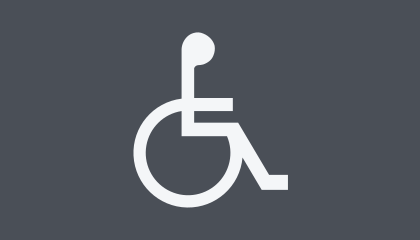
Supplements parking-regulation signs by marking a bay reserved for people with impaired mobility (forflytningshemmede). Where the bay is reserved around the clock, the symbol must be painted.
1044
Skinnekjøretøy
Rail vehicle
The tram symbol warns of rail vehicles: it is painted where pedestrians cross a tram track at a designated crossing point.
1050
Tekst
Text
Text on the road surface reinforces signs: «STOPP» at sign 204 and the stop line, «BUSS» and «TAXI» in bus lanes and at stops, «SKOLE» near a school by the road, road numbers and place names supplementing direction signs.
1052
Sambruksfelt
High-occupancy vehicle lane
The number in the sambruksfelt states the minimum number of people that must be in the vehicle for it to use the lane.
1053
Tungtrafikkfelt
Heavy vehicle lane
Marks a tungtrafikkfelt (heavy-vehicle lane): the lane is introduced by sign 506 «Tungtrafikkfelt», ended by 507, and is marked like a bus lane, separated by a skillelinje.
1054
Fartsgrense
Speed limit
Speed-limit digits on the road surface supplement the signs: «30» is used in 30 km/h zones in urban areas, «50»–«70» to underline the limit in force at speed cameras (ATK).
1055
Bildeling
Car sharing
The «BILDELING» text marks parking bays for car-sharing: it supplements sign 552 «Parkering» with a sub-sign reserving the bay for car-share vehicles.
Illustrations are official figures from skiltforskriften (Lovdata), vector artwork from Wikimedia Commons (public domain), and our own vector renderings based on official figures. Translations, explanations, and advice are our unofficial study aids; only the Norwegian statute text carries legal force.
FAQ
What is the difference between yellow and white road markings?
Longitudinal yellow lane separators divide opposing traffic flows. White lines can separate lanes travelling in the same direction or mark the road edge. White edge lines alone do not establish that a road is one-way.
Can you ever cross a solid line (sperrelinje)?
A solid line prohibits driving on or across it. For combined lines, follow the nearer line; a driver already in the oncoming lane may nevertheless return to the right. Broken lines do not remove other overtaking or lane-change restrictions. Warning lines indicate limited overtaking visibility (yellow) or danger when changing lane (white), not necessarily an imminent solid line.
Are road markings tested on the theory exam?
Yes. The official Statens vegvesen topic is titled «Skilt og oppmerking» (Signs and Markings). These are useful subjects to practise alongside the official rules.