Stans and Parkering Are Distinct Legal Concepts
For stopping and parking prohibitions, distinguish a voluntary stop (stans) from a stop required by traffic, signals or the need to avoid danger. Even a ten-second voluntary stop can be prohibited. In contrast, parkering has a specific statutory definition in Norwegian law — broader than simply "leaving the car and walking away":
«Enhver hensetting av kjøretøy, selv om føreren ikke forlater det. Unntatt er kortest mulig stans for av- eller påstigning eller av- eller pålessing.»
Any placing of a vehicle, even if the driver does not leave it. Excepted is the shortest possible stop for getting on or off or for loading or unloading. (unofficial translation)
This definition has two practical consequences. First: remaining in the vehicle does not stop voluntary parking from being parkering. A halt required by traffic is not parking. Second: the only exception is the shortest possible stop to pick up/drop off passengers or load/unload goods — waiting "just five minutes" under a No Parking sign is an offence.
Hence the overarching hierarchy: a parking ban is less restrictive than a stopping ban. A parking-only prohibition does not itself ban the shortest possible passenger or loading stop, but other stopping prohibitions and safety duties still apply. A stopping prohibition (stans forbudt) also rules out those voluntary stops; it does not prohibit a stop required by traffic or to avoid danger.
Where Stopping Is Prohibited (§ 17 nr. 1)
The first list in § 17 specifies locations where stans (stopping) is forbidden: blind bends, tunnels, crests of hills, junctions, footways, pedestrian crossings, motorways, level crossings, bus lanes, and cycle lanes. Some provisions specify exact distances:
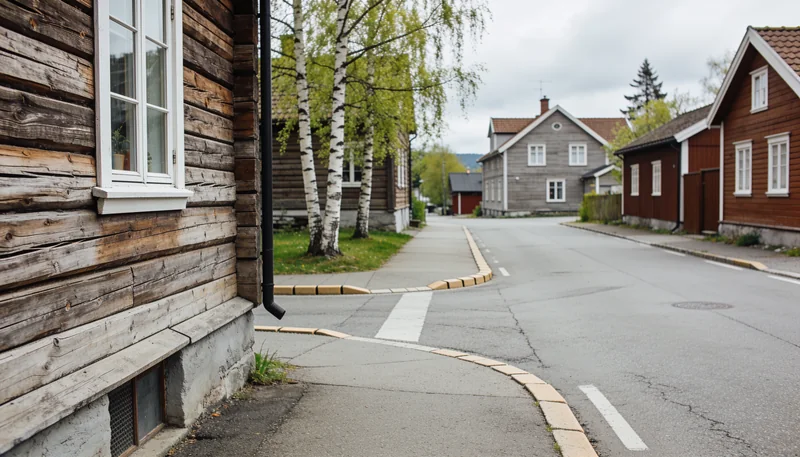
«i vegkryss eller nærmere enn 5 meter fra vegkrysset. Avstanden regnes fra det punkt hvor fortaukant, kantlinje eller vegkant begynner å runde»
in a junction or closer than 5 metres from the junction. The distance is measured from the point where the fortau edge, edge line or road edge begins to curve (unofficial translation)
«på gangfelt eller sykkelkryssing eller nærmere enn 5 meter foran slike steder»
on a gangfelt or a cycle crossing, or closer than 5 metres before such places (unofficial translation)
Notice the word foran — "before": at pedestrian crossings, stopping is prohibited within 5 metres before the crossing in the direction of travel. The purpose is visibility: a vehicle parked before a zebra crossing blinds approaching drivers to crossing pedestrians. Stopping immediately after a crossing is not banned by this clause. Transit stops have their own rule:
«på vegutvidelse for holdeplass for buss, drosje eller sporvogn eller nærmere enn 20 meter fra offentlig trafikkskilt for slik holdeplass. Unntatt er av- eller påstigning når den ikke er til hinder for buss, drosje eller sporvogn.»
on a road widening serving as a stop for buses, taxis or sporvogn, or closer than 20 metres from the official traffic sign for such a stop. Getting on or off is excepted when it does not obstruct a bus, taxi or sporvogn. (unofficial translation)
Where Only Parking Is Prohibited (§ 17 nr. 2–3)
The second list specifies locations where parkere (parking) is forbidden, without itself prohibiting the shortest possible passenger or loading stop, provided no other rule forbids the stop:
in front of an entrance or exit (unofficial translation)«foran inn- eller utkjørsel»
— as well as on passing places across the full widened width, on pedestrian streets (gågate), and in residential courtyard streets (gatetun) outside marked bays. In addition, priority roads have a specific rule:
«På forkjørsveg med høyere fartsgrense enn 50 km i timen er det forbudt å parkere på kjørebanen.»
On a forkjørsveg with a speed limit higher than 50 km/h it is prohibited to park on the carriageway. (unofficial translation)
Signs: 370, 372 and Parking Zones
Traffic signs from skiltforskriften operate alongside § 17. The pair 370/372 mirrors the same conceptual asymmetry: "No Stopping" (Stans forbudt, 370) is stricter than "No Parking" (Parkering forbudt, 372). Parking zone signs apply throughout the designated area until the end-of-zone sign, while local signs can set different rules at particular places:
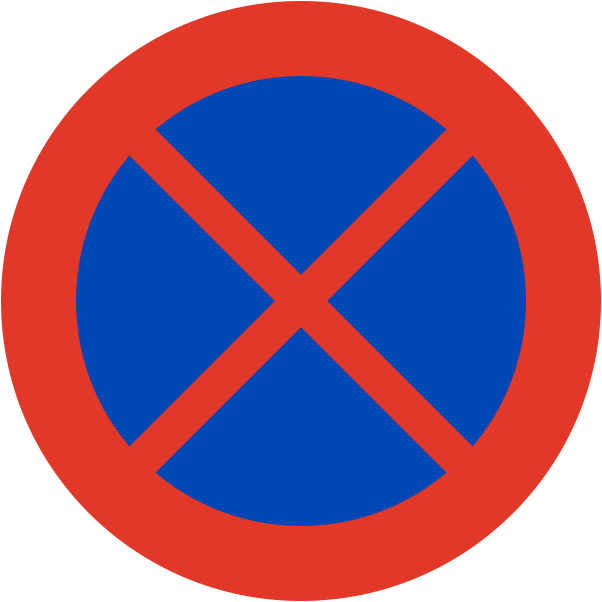
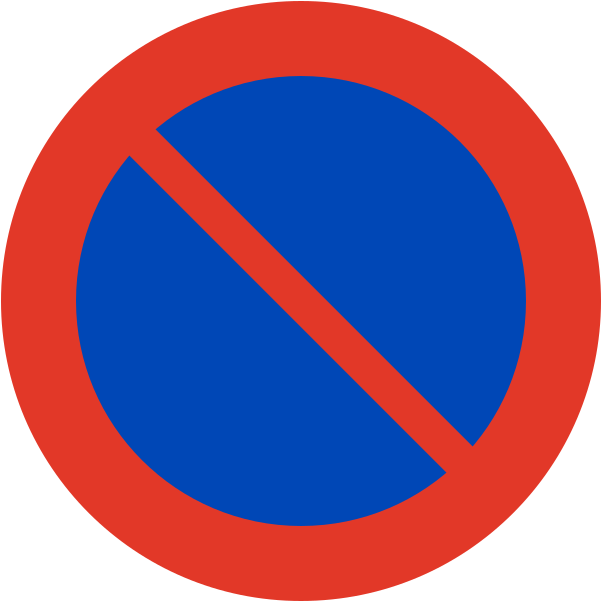
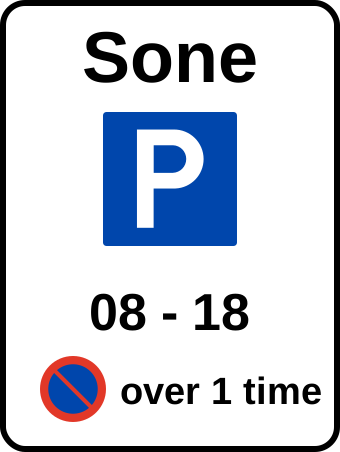
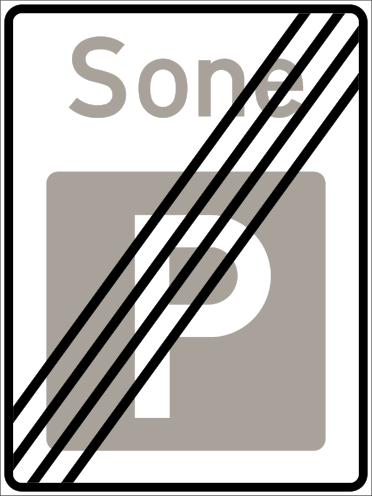
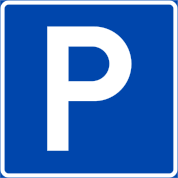
Details for each sign are available in our prohibitory signs guide.
Practice scenarios
Practice scenarios: "Can you drop off a passenger under sign 372?" (yes — that is not parkering if it is the shortest possible stop for alighting and no other rule forbids stopping); "Can you wait in your car for a friend under sign 372?" (no — remaining seated in the car is still parkering); "How many metres before a zebra crossing is stopping prohibited?" (5 metres, and specifically before the crossing); "How many metres from a bus stop sign?" (stopping is prohibited in the stop bay and within 20 metres of the official stop sign; passenger boarding/alighting is excepted only if it does not obstruct buses, taxis or trams). Try practice questions in the simulator: first question free without sign-up.
Sources
- Trafikkreglene § 17 Stans og parkering (Lovdata)
- Trafikkreglene § 1 — definition of parkering (Lovdata)
- Skiltforskriften — Signs 370–378, 552 (Lovdata)
Verbatim statutory quotes are from the official Norwegian text on Lovdata; translations and commentary are unofficial study aids. Only the Norwegian text is legally binding.