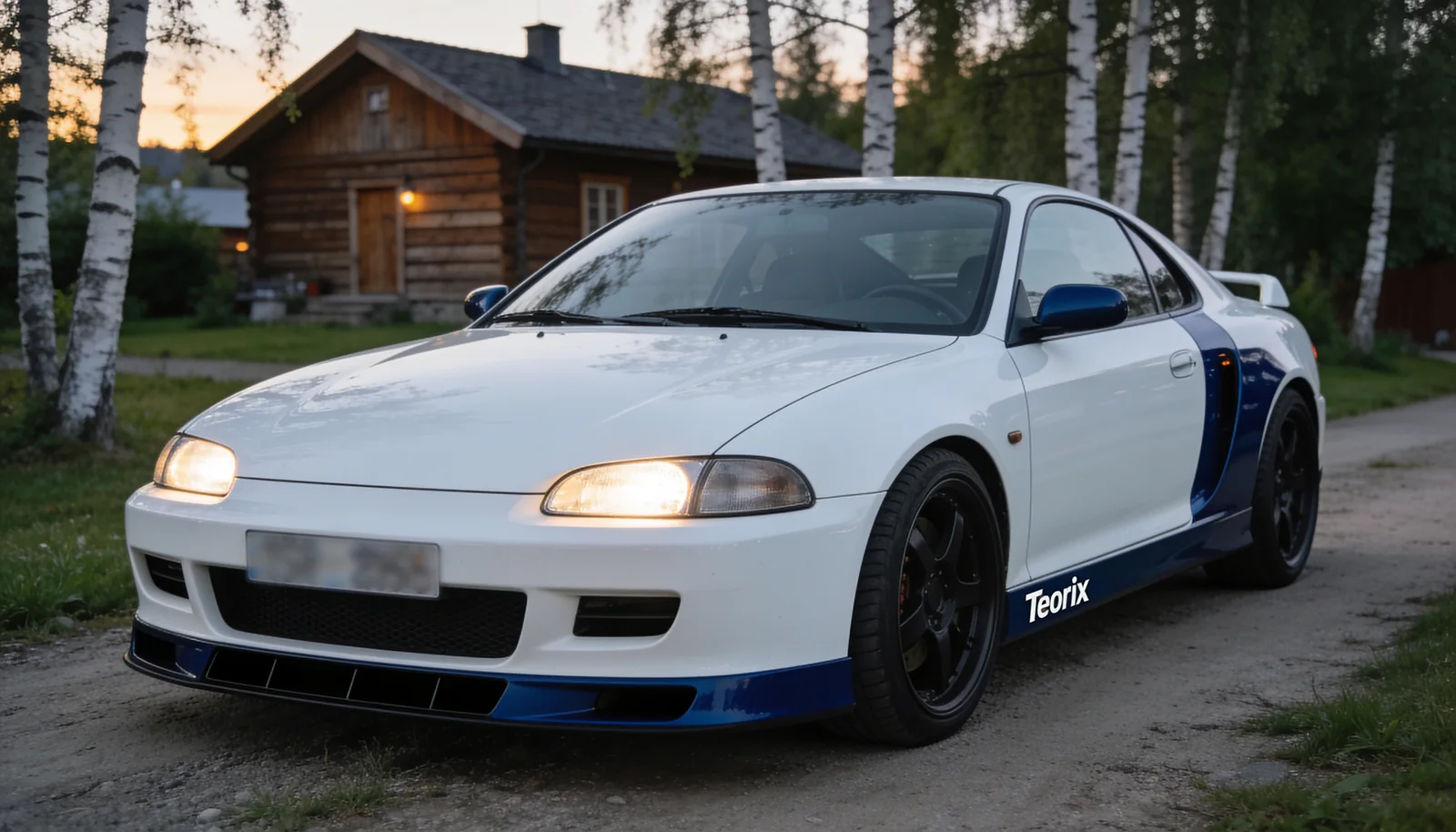
Lights always on — a statutory rule, not a habit
§ 15 opens with the general principle — lights are mandatory whenever visibility conditions require them:
«Lys som er påbudt for kjøretøy, skal være tent under kjøring når lys- eller siktforholdene gjør det påkrevd for å gi føreren tilstrekkelig synsfelt eller for å gjøre kjøretøyet synlig for annen trafikant.»
Lights that are mandatory for a vehicle shall be switched on while driving when light or visibility conditions make it necessary in order to give the driver a sufficient field of vision or to make the vehicle visible to other road users. (unofficial translation)
However, for a motorvogn the regulation immediately adds a second sentence that makes Norway a "lights-on-at-all-times" country:
«Under kjøring med motorvogn skal påbudt fjernlys, nærlys eller godkjent kjørelys alltid være tent.»
While driving a motorvogn, the mandatory fjernlys, nærlys or approved kjørelys shall always be switched on. (unofficial translation)
The word alltid — "always" — means literally that: bright sunshine on a July afternoon does not exempt you. Any of three options suffices: high beam, low beam, or approved daytime running lights (kjørelys).
High beam and low beam: which and when
The logic of § 15 is straightforward: high beam is the default optimum because it maximizes your field of vision, but it has a strict boundary:
«Fjernlys må ikke benyttes slik at annen trafikant blir blendet.»
Fjernlys must not be used in a way that dazzles another road user. (unofficial translation)
The exact same dazzling prohibition applies when meeting a train, a tram (sporvogn), or even a boat being navigated along the road. Low beam is defined as the default lighting whenever high beam is unnecessary or prohibited:
«Nærlys skal nyttes når fjernlys ikke er påkrevd eller ikke er tillatt brukt.»
Nærlys shall be used when fjernlys is not required or is not permitted. (unofficial translation)
Lights during stopping and parking
During voluntary stopping or parking on a road, when light or visibility conditions require the vehicle to be visible, use parking lights; high and low beam must be off in that situation. This does not mean switching off driving lights at a red light or in a traffic queue:
«Parkeringslys skal være tent under stans eller parkering på veg når lys- eller siktforholdene gjør det påkrevd for å gjøre kjøretøyet synlig for annen trafikant.»
Parking lights shall be switched on while stopping or parking on a road when light or visibility conditions make it necessary in order to make the vehicle visible to other road users. (unofficial translation)
«Fjernlys eller nærlys må ikke være tent under stans eller parkering som nevnt i første ledd.»
Fjernlys or nærlys must not be switched on during a stop or parking as mentioned in the first paragraph. (unofficial translation)
Where stopping and parking are permissible is covered in depth in our guide: Stopping and parking: stans vs parkering.
Fog lights: what § 15 says — and what it does not
Regarding auxiliary lights, the regulation establishes two clear boundaries: they may only be used for their intended purpose, and —
«Kurve-/tåkelys kan ikke nyttes sammen med nærlys.»
Cornering or fog lights cannot be used together with nærlys. (unofficial translation)
In other words, fog lights replace low beam rather than complement it (the only statutory exception is motorcycles in daylight). Crucially, § 15 does not specify specific weather thresholds for activating fog lights — it regulates only combinations; the overarching principle of nr. 1 applies: lights must ensure visibility and illuminate the road.
Do not confuse: vehicle lights vs light signals
Vehicle lights (lys på kjøretøy, Trafikkreglene § 15) and traffic light signals (lyssignaler, Chapter 12 of skiltforskriften) are distinct topics and have different legal meanings. Examples of traffic signals:
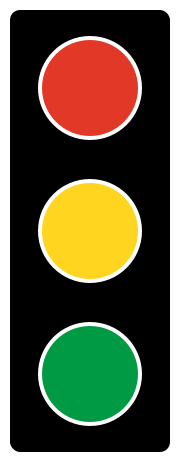
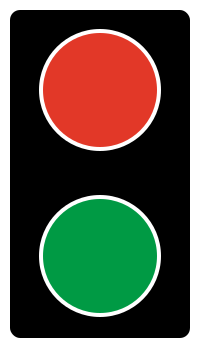



The complete classification is available on the light signals page.
Practice scenarios
Practice scenarios: “are lights required in daylight in summer?” (yes — alltid, § 15 nr. 1); “an oncoming driver is dazzled by your high beam — who violated the rules?” (you — nr. 2); “what lights must remain on a vehicle voluntarily parked on a dark unlit road?” (parking lights; high and low beams are strictly prohibited — nr. 4); “can you drive with fog lights and low beam on simultaneously?” (no — nr. 5). Related topic: speed and sight distance. Try practice questions in the simulator: first question free without registration.
Sources
Verbatim statutory quotes are sourced from the official Norwegian text on Lovdata; translations and analysis are our own unofficial study guides. Only the Norwegian text has legal effect.