What the law requires at a crossing
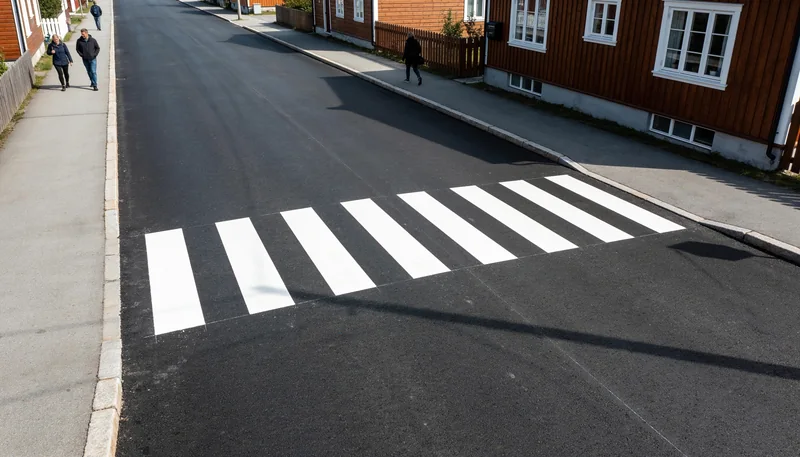
The main rule here is trafikkreglene § 9 nr. 2. If a crossing is not controlled by traffic lights or the police, the driver must give way to a pedestrian who is already on the crossing or is stepping onto it.
«Ved gangfelt hvor trafikken ikke reguleres av politi eller ved trafikklyssignal, har kjørende vikeplikt for gående som befinner seg i gangfeltet eller er på veg ut i det.»
At a pedestrian crossing (gangfelt) where traffic is not controlled by the police or by traffic lights, drivers have a duty to give way (vikeplikt) to pedestrians who are in the crossing or about to step out into it. (unofficial translation)
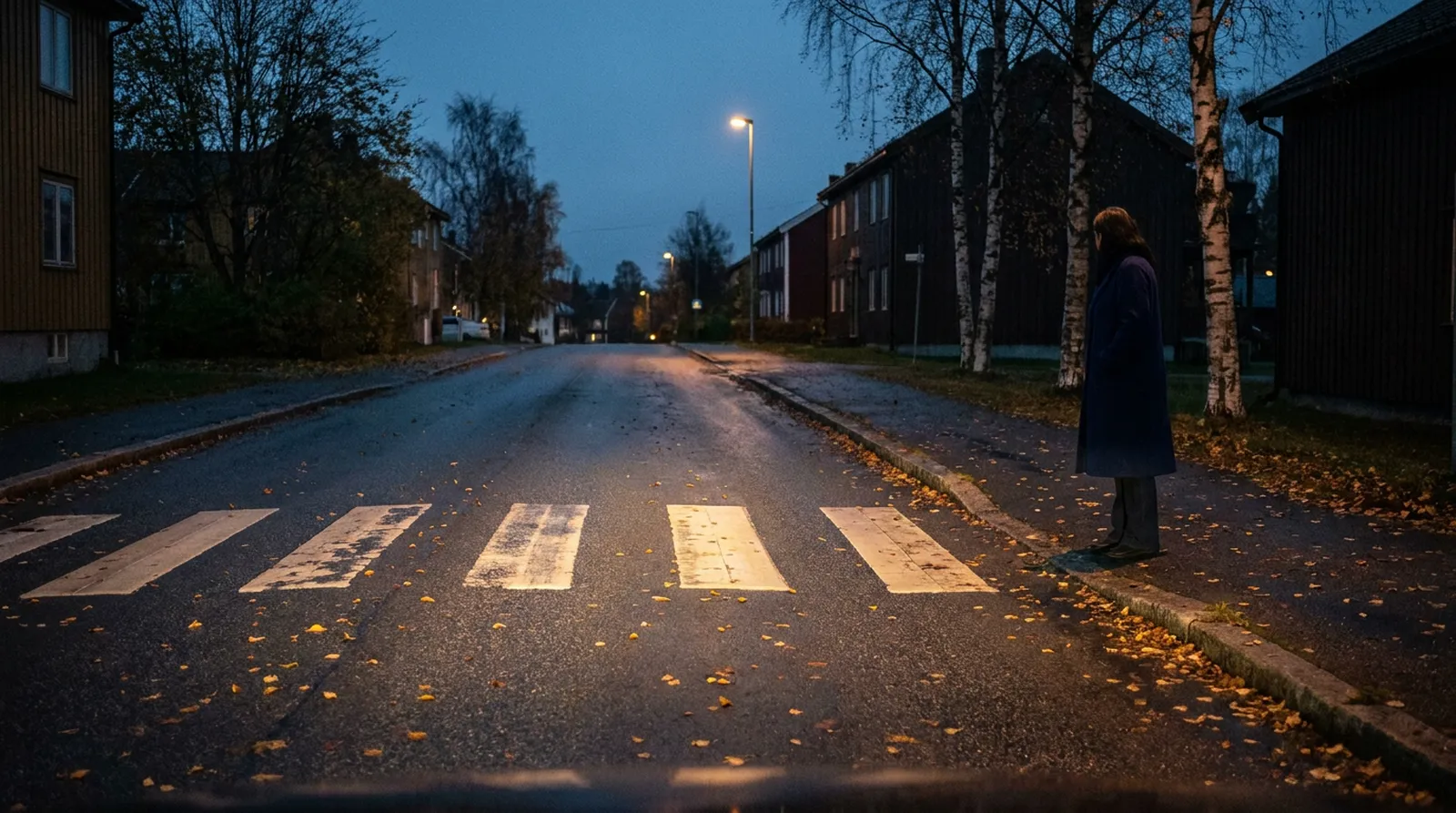
Note the second part: «er på veg ut i det». The duty starts before the person sets foot on the zebra crossing. If they have come to the edge and clearly intend to cross, you must already let them cross. So arguing about whether they were still on the pavement or had already stepped out settles nothing.
The law has no exception for people who are hard to see. A pedestrian in a dark jacket without a reflector has the same rights on the crossing as a person in a reflective vest. Poor visibility means only one thing: you need more margin to spot them in time.
Why you cannot see a person in the dark
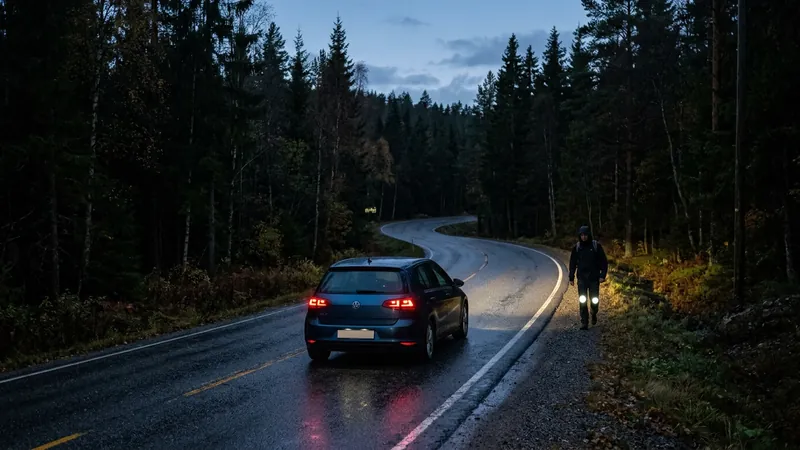
According to Trygg Trafikk, four out of ten accidents involving pedestrians happen in the dark. With dipped headlights you can see a pedestrian without a reflector from about 25-30 metres, and with a reflector from about 140 metres. Statens vegvesen puts this in seconds: at 50 km/h a driver has only 2 seconds to spot a person without a reflector, and 10 seconds if they have one. We went through the distances and braking distance in detail in our article on driving in the dark.
It takes about a second to notice a hazard and move your foot to the brake. All that time the car keeps going at the same speed. Editorial calculation: speed divided by 3.6. Without a reflector, a pedestrian in dipped headlights can be seen from about 25-30 m.
Now add an evening after rain. Wet asphalt reflects headlights and street lights, cars are coming towards you, and a person in a dark coat is standing at the edge of the crossing. Each detail on its own does not get in the way much, but together they hide the person almost completely.
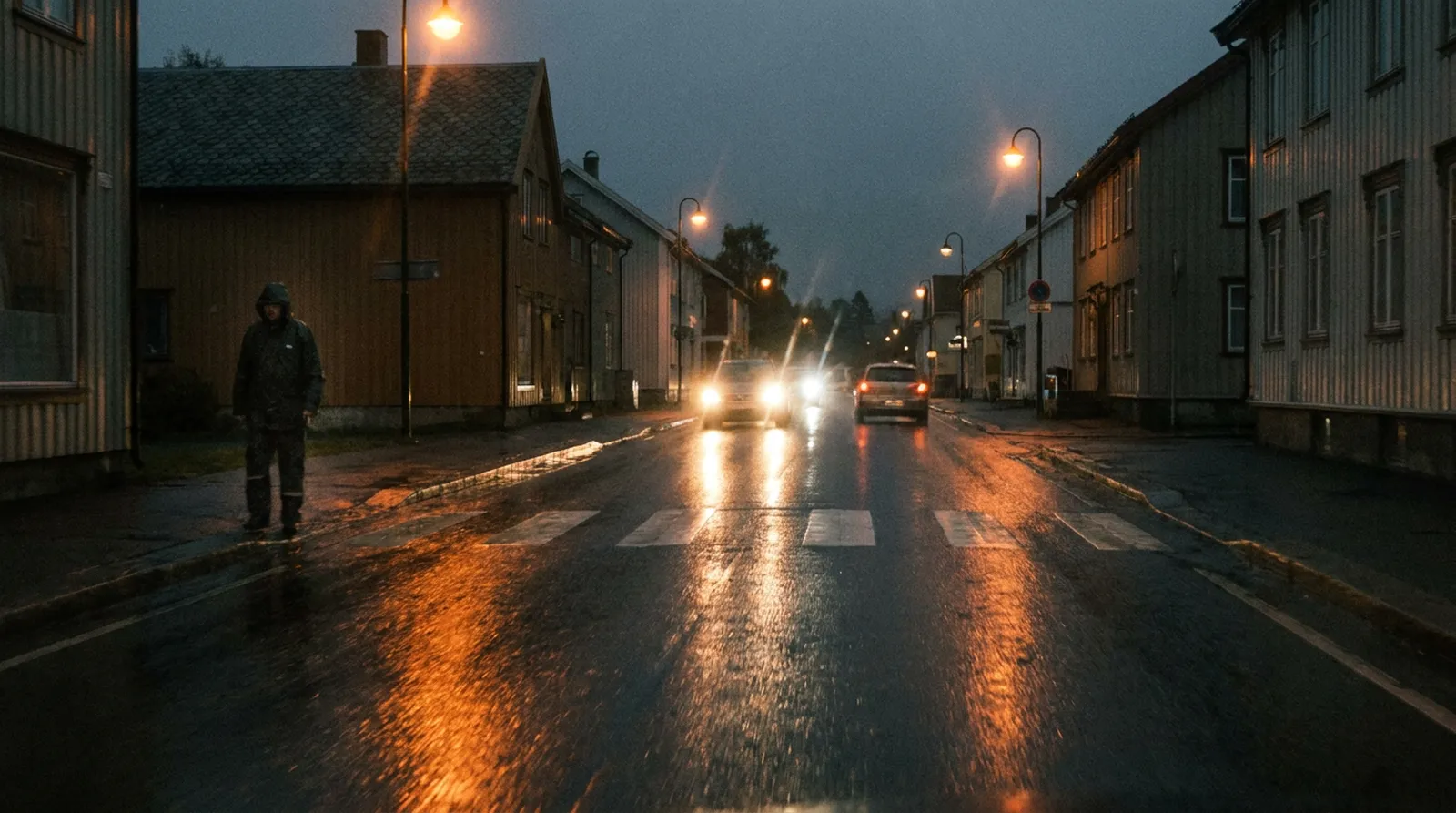
So in the dark, approach a crossing as if someone is there. Take your foot off the accelerator early, watch both edges of the pavement and the places where people stand: a bus stop, a shop entrance, the corner of a building. If an oncoming car dazzles you, look at the right edge of your lane and slow down, rather than waiting for your eyes to adjust.
A car at the crossing blocks your view
The most dangerous picture at a crossing looks calm. In the next lane a car or a van has stopped before the zebra crossing. There is nobody in front of it, nobody is crossing. But the car may have stopped precisely because it is letting through a person you cannot see behind its body.
There is a separate rule for this case:
«Kjørende som nærmer seg gangfelt, må ikke kjøre forbi kjøretøy eller sporvogn som hindrer noen del av sikten til gangfeltet.»
A driver approaching a pedestrian crossing (gangfelt) must not overtake a vehicle or tram (sporvogn) that obstructs any part of the view of the crossing. (unofficial translation)
Put simply, if someone is blocking part of the crossing from your view, you do not drive past them. Slow down and stay behind that vehicle: as long as it blocks your view of any part of the crossing, you do not drive past it.
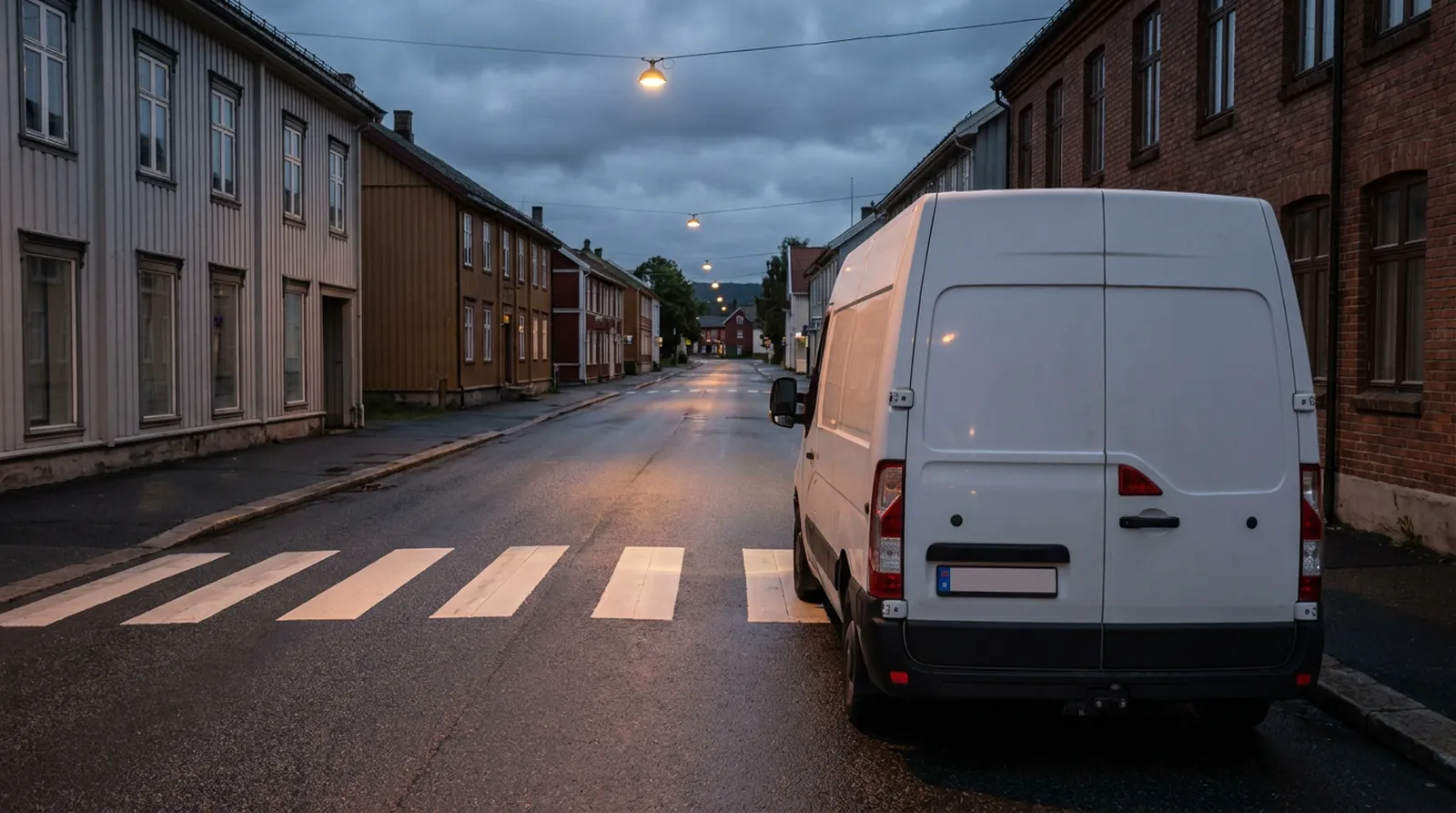
For the same reason, trafikkreglene § 17 forbids stopping on a crossing and less than 5 metres before it. The five metres before the zebra crossing are there so that a person approaching it can be seen. If someone has stopped there anyway, treat that vehicle as a wall, just like the van.
Children after dark
Trafikkreglene § 13 nr. 2 requires an especially low speed, and if needed an immediate stop, when children are near the road or on it. A child can run out from behind a parked car before reaching the crossing, and in the dark you will notice the child last.
On the evening of 31 October, children in Halloween costumes walk the residential streets of Norway. The costumes are often dark: witches, vampires, skeletons. The children go from house to house and cross the street where it suits them, not where there is a zebra crossing. On an evening like this we advise you to drive along a residential street slower than the sign allows and to look into the gaps between the cars parked along the pavement.
If you are taking your own children out, attach a reflector to the costume, at knee height and on the side, so that it shows up in headlights. A torch in the hand helps too.
How to approach a crossing in the dark
We have put together a short list of things worth doing every evening, not only at Halloween.
In the exam these situations come as a picture: a crossing, a stopped car, a pedestrian at the edge. The answer almost always rests on two rules. You give way to a pedestrian stepping onto an uncontrolled crossing (§ 9). You do not drive past a car that is blocking the crossing (§ 12 nr. 6).
Check yourself
It is evening. You are approaching an uncontrolled crossing. In the next lane a car has stopped before it, and you cannot see any pedestrians. Can you drive past it at the same speed?
Explanation: No. Under trafikkreglene § 12 nr. 6 you must not drive past a car that blocks your view of the crossing. It may have stopped to let through a person you cannot see. Slow down and do not pass it while it blocks your view of part of the crossing.
Put it into practice
Open Teorix and find the questions on pedestrian crossings. Read the explanation together with the text of the rule. If you got it wrong, go back to the picture and find the detail that changed the answer: a stopped car, a child at the edge, traffic lights.
Sources
- Trafikkreglene § 9 (gående), § 12 nr. 6 (forbikjøring ved gangfelt), § 13 nr. 2 (barn), § 17 (stans ved gangfelt)
- Trygg Trafikk — Refleks
- Statens vegvesen — Sikker i mørket
- Trygg Trafikk — Kjære bilfører, det er blitt mørkt ute
The rules come from trafikkreglene (Lovdata). The visibility distances of 25-30 m and 140 m and the share of accidents in the dark come from Trygg Trafikk, the 2 and 10 seconds at 50 km/h come from Statens vegvesen, and the editorial team worked out the distance covered in one second. The advice is our own. The “Check yourself” question was written by the Teorix editorial team and is not an official Statens vegvesen question.