What the reversing rule requires
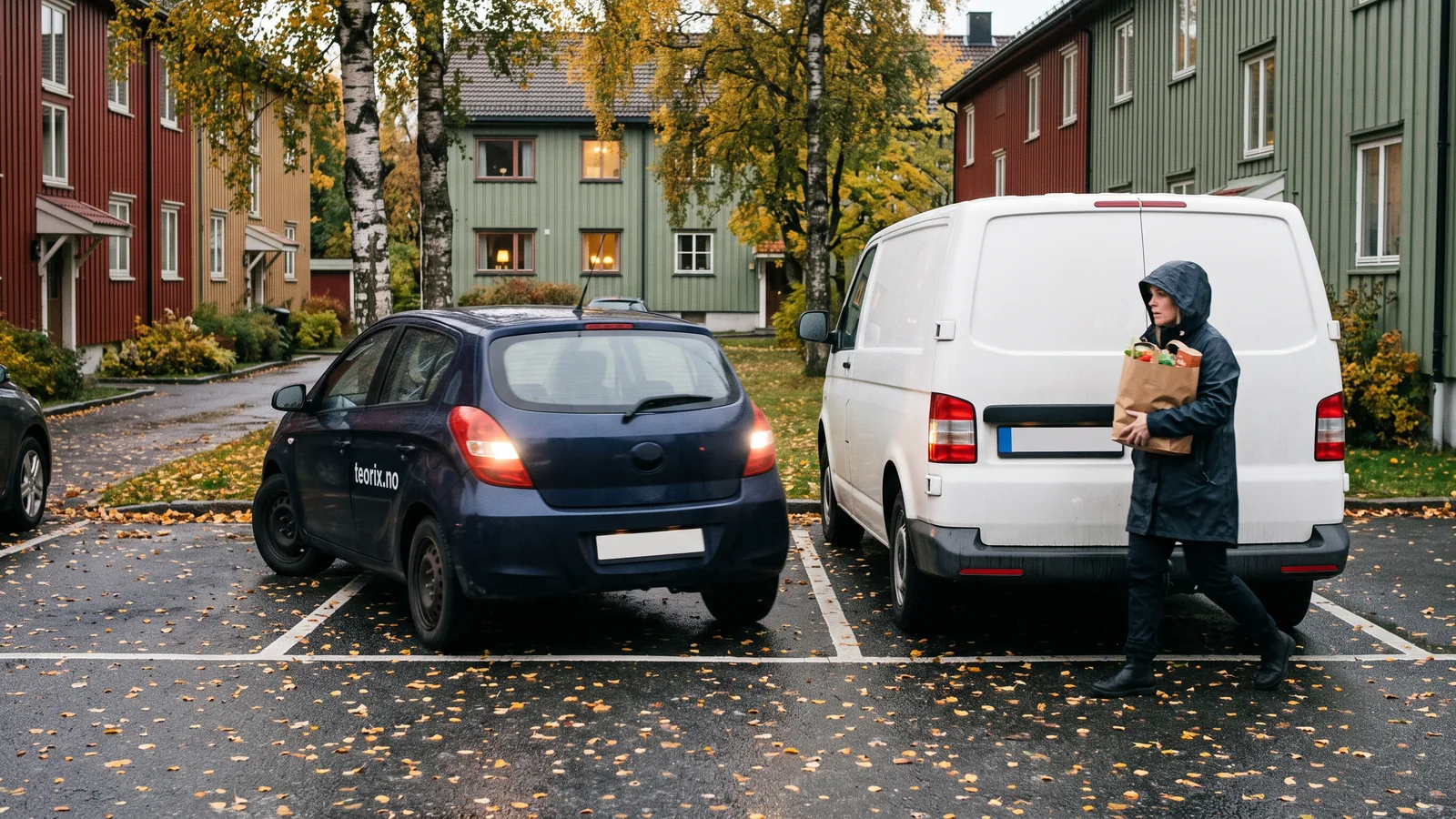
Trafikkreglene § 11 covers reversing and turning around. A driver doing either must give way to other road users. That includes a person walking behind the car: lit reversing lights do not give the car priority.
«Den som rygger eller vender, har vikeplikt for annen trafikant. Er utsikten ikke tilstrekkelig, må det ikke foretas rygging eller vending uten at en annen passer på eller fører ved selvsyn har forvisset seg om at det ikke kan oppstå fare eller skade.»
Whoever is reversing or turning around must give way (vikeplikt) to other road users. If the view is not sufficient, reversing or turning must not be carried out unless another person keeps watch or the driver has personally made sure that no danger or damage can arise. (unofficial translation)
If the view is not sufficient, you may start the manoeuvre in only two cases: another person keeps watch, or you have personally made sure that no danger or damage can arise. Low speed or a short distance does not remove this requirement. On a motorway (motorveg) and an expressway (motortrafikkveg), and on the ramps onto and off them, reversing and turning around are prohibited altogether (§ 11 nr. 2).
Build your view before you move
Before you get in, look around the car and along the path you intend to take. Notice gaps between parked vehicles, low obstacles and places someone could step out from. Check again once you are in the driver's seat: the situation may have changed while you were settling in.
Use the mirrors, direct view and the car's systems together. Read the manual to learn which area the camera covers and how the warnings work. Dirt, water on the lens and poor light can make the picture harder to judge. If an important part of the path is still unchecked, stop and restore your view.
Your helper must stay visible
When another person helps you keep watch, agree on clear signals in advance and agree that you stop if you lose contact. The helper should stand somewhere safe, outside the car's path, where you can see them. Do not ask a helper to stand directly behind a moving car or between it and an obstacle.
If the helper disappears from view, stop and re-establish contact before you continue. Their presence does not release you from the duty to give way and to judge whether the manoeuvre is safe. This is our practical advice: § 11 does not lay down any hand signs or signals.
Example: the camera is clear, the walkway is hidden
You are reversing out of a parking space. The screen shows a clear area right behind the car, but the van next to you hides the approach to it. A pedestrian steps out from there. A clear picture was no guarantee that nobody would walk into your path a second later.
Before you move, assess that hidden approach in particular. If you cannot make sure it is safe, change how you do the manoeuvre, restore your view or get help as the rule allows. Keep watching while you move and stop whenever the situation becomes unclear. This manoeuvre is best practised with an instructor in a suitable place.
Check yourself
The camera shows nobody, but part of the space behind the car is hidden by the car parked next to you. Is the safety check finished?
Explanation: No. You need to assess the whole intended path and the hidden approaches. When the view is not sufficient, the conditions in § 11 apply; if another road user appears, the reversing driver gives way.
Try it in practice
Open Teorix and find a question about reversing or the duty to give way. Read the explanation together with the rule and put into words which detail of the situation means you should stop before the manoeuvre.
Sources
The advice on looking around and working with a helper is practical guidance, not the wording of the rule. The “Check yourself” question was written by the Teorix editors and is not an official Statens vegvesen question.