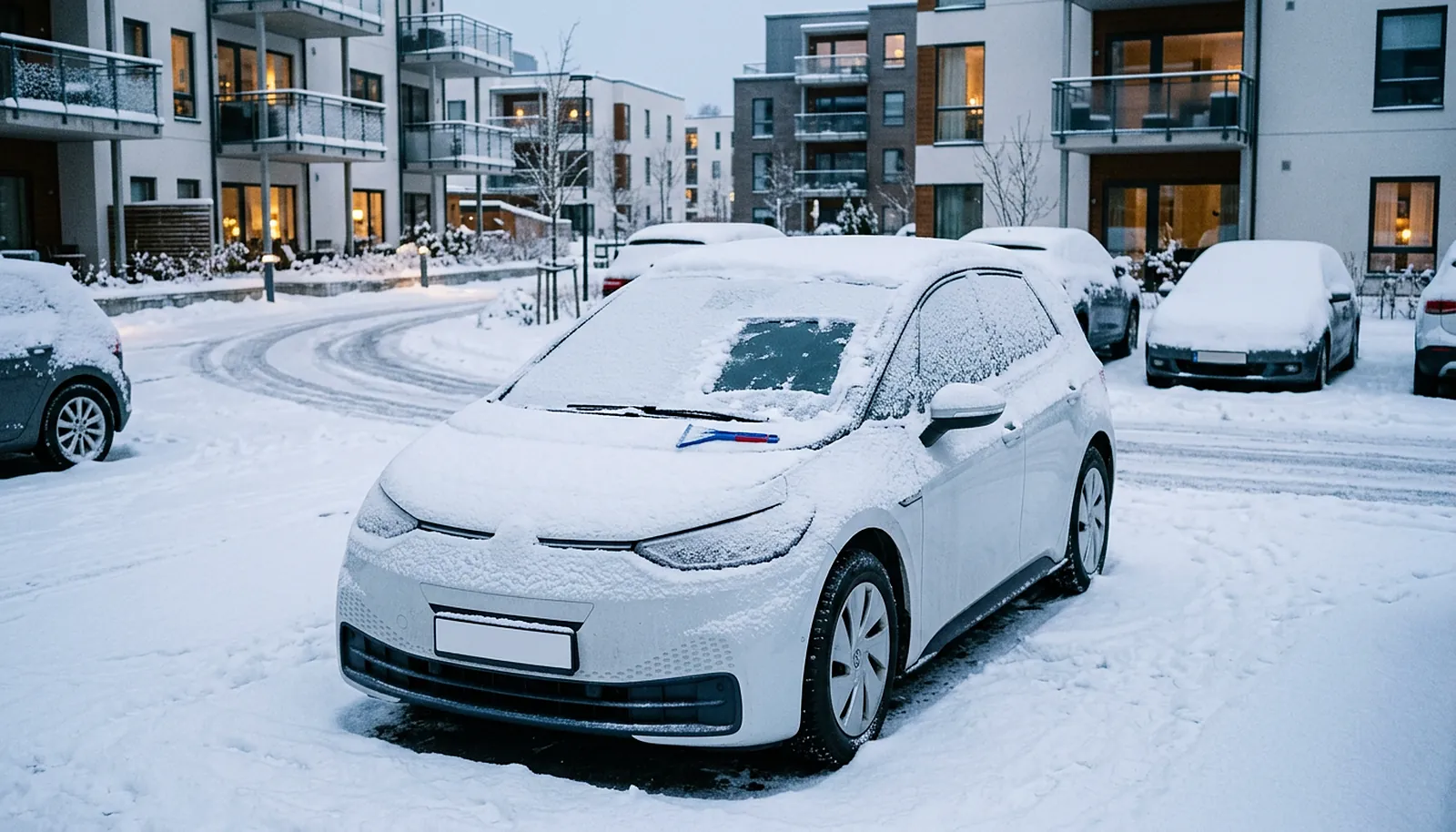
What the law requires
The rule on view is not in trafikkreglene but in forskrift om bruk av kjøretøy, the regulations on the use of vehicles. It is the short § 1-3:
«Føreren skal sørge for å ha tilstrekkelig utsyn til alle sider, derunder påse at snø, is, dugg eller merke eller annen gjenstand ikke hindrer sikten eller virker forstyrrende.»
The driver must ensure sufficient visibility in all directions, including making sure that snow, ice, condensation, a sticker or any other object does not obstruct the view or cause a distraction. (unofficial translation)
Three details matter here. First, “til alle sider”: in all directions, not just ahead. Second, snow, ice and fogging are named outright, so there is no arguing about them. Third, “føreren skal sørge for”: the driver is responsible for this, not the weather and not the heater.
The rule applies the whole time you are driving. If you lose your view on the way, you are still obliged to get it back.
Why a peephole in front of the wheel isn't enough
Through a small cleared patch you see the road straight in front of the bonnet. You don't see the pedestrian on the right at the edge of the pavement, the cyclist in the mirror or the car approaching the junction from the left. Yet that is usually where danger starts when you pull out of a yard or cross a junction.
You need the side windows to look both ways at a junction and when reversing out. You need the mirrors and rear window when changing lanes and braking. A camera and parking sensors don't replace the glass: in winter they get covered in snow and splashed with dirt too.
While you're at it, clear the headlights and rear lights. Under a layer of snow they shine dimly and others see your car less well. And check that the number plates can be read.
Snow on the roof
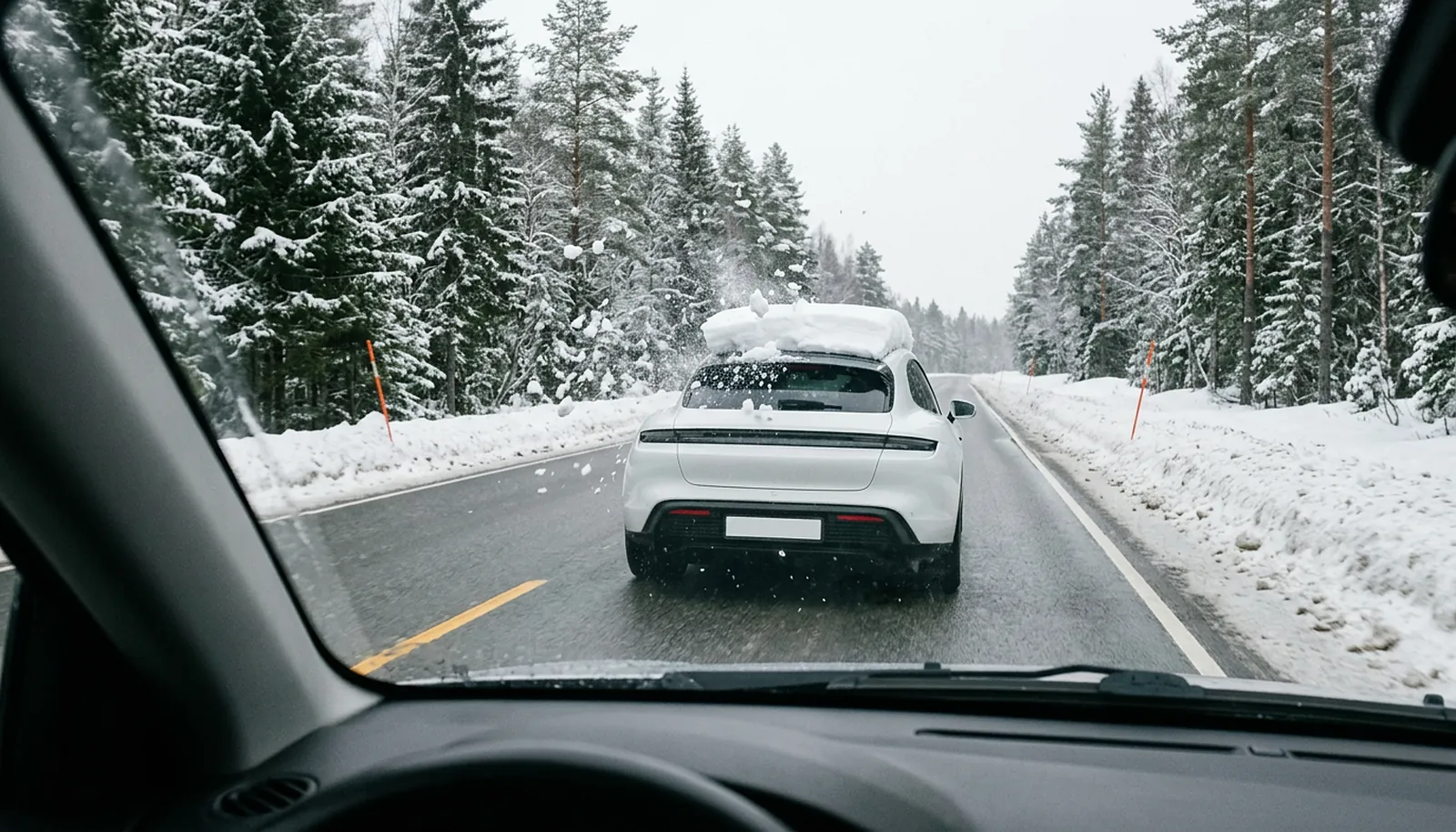
While the car is parked, snow on the roof bothers no one. The trouble starts once you move. The first time you brake, a slab slides down onto the windscreen and blocks your view completely, right when you need to see the road. At speed, the wind tears snow and ice off the roof and throws them at the windscreen of the car behind.
This is where the basic rule of road traffic applies:
«Enhver skal ferdes hensynsfullt og være aktpågivende og varsom så det ikke kan oppstå fare eller voldes skade og slik at annen trafikk ikke unødig blir hindret eller forstyrret.»
Everyone must travel considerately and be alert and careful so that no danger can arise and no damage is caused, and so that other traffic is not unnecessarily hindered or disturbed. (unofficial translation)
Snow that flies off your car onto someone else's windscreen is exactly that kind of danger to others. So clear the car from the top down: roof first, then the windows, then the bonnet and lights. Otherwise snow from the roof will cover the glass you have just cleared.
Why windows fog up
Windows fog up on the inside when warm, moist air in the car meets cold glass. The moisture comes from breathing, a wet jacket, snow on your boots melting onto the mat. The more people in the car and the wetter their clothes, the faster it happens.
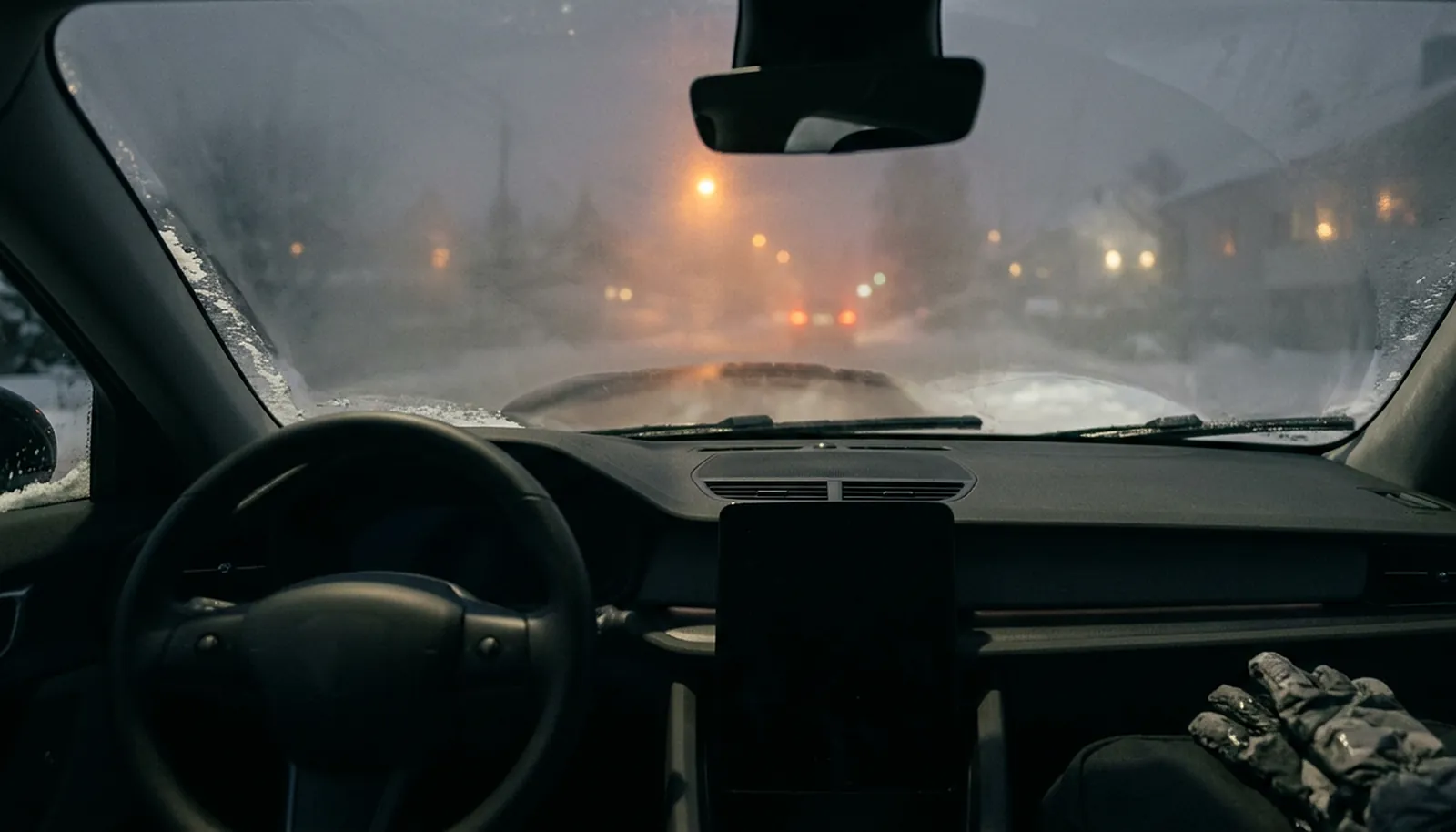
Learn the demister buttons in advance, with the car standing still. Every model does it differently, and newer cars hide some settings in on-screen menus. Hunting for them on the move, when the glass is already white, means looking at the screen instead of the road.
If the windows fog up while driving
Turn the windscreen demister up to full. If you can see better within a few seconds, you can carry on, but more slowly until the glass is fully clear.
If you still can't see well, find a place where you can stop legally: a car park, a lay-by, a petrol station. There, set the demister calmly, wipe the glass and wait until it is clear. Driving almost blind while fiddling with the climate controls means creating two dangers at once.
Don't wipe the glass with your hand or sleeve while driving. It leaves greasy smears, and in the lights of oncoming traffic they glare and make things even worse.
Before you set off: a quick routine
We've put it all in one list. It takes a few minutes, so head out to the car a bit earlier.
In the exam, § 1-3 doesn't only come up in winter questions. A sticker on the rear window, an ornament hanging from the mirror and swinging in front of your eyes, bags on the back seat blocking the side window: all of these break the same rule. The answer rests on the words “til alle sider” and “virker forstyrrende”.
Check yourself
A frosty morning. You've cleared the windscreen, but the side windows are still covered in frost. Can you pull out of the yard and let them thaw on the way?
Explanation: No. Under forskrift om bruk av kjøretøy § 1-3 the driver must have a sufficient view in all directions before setting off. Through frosted side windows you can't see the pavement or the cars on the street you're pulling into. Clear them or wait until the demister has melted the frost.
Try it in practice
Open Teorix and find the questions in the theme “Driver and owner responsibility”. The bank has eight questions on § 1-3: about frost, a sticker, a mirror ornament and a load on the back seat. Read the explanation together with the text of the rule and see which word of the law the answer rests on.
Sources
The rules are taken from forskrift om bruk av kjøretøy § 1-3 and vegtrafikkloven § 3 (Lovdata). The advice on clearing snow and demisting is ours. The “Check yourself” question was written by the Teorix editors and is not an official Statens vegvesen question.