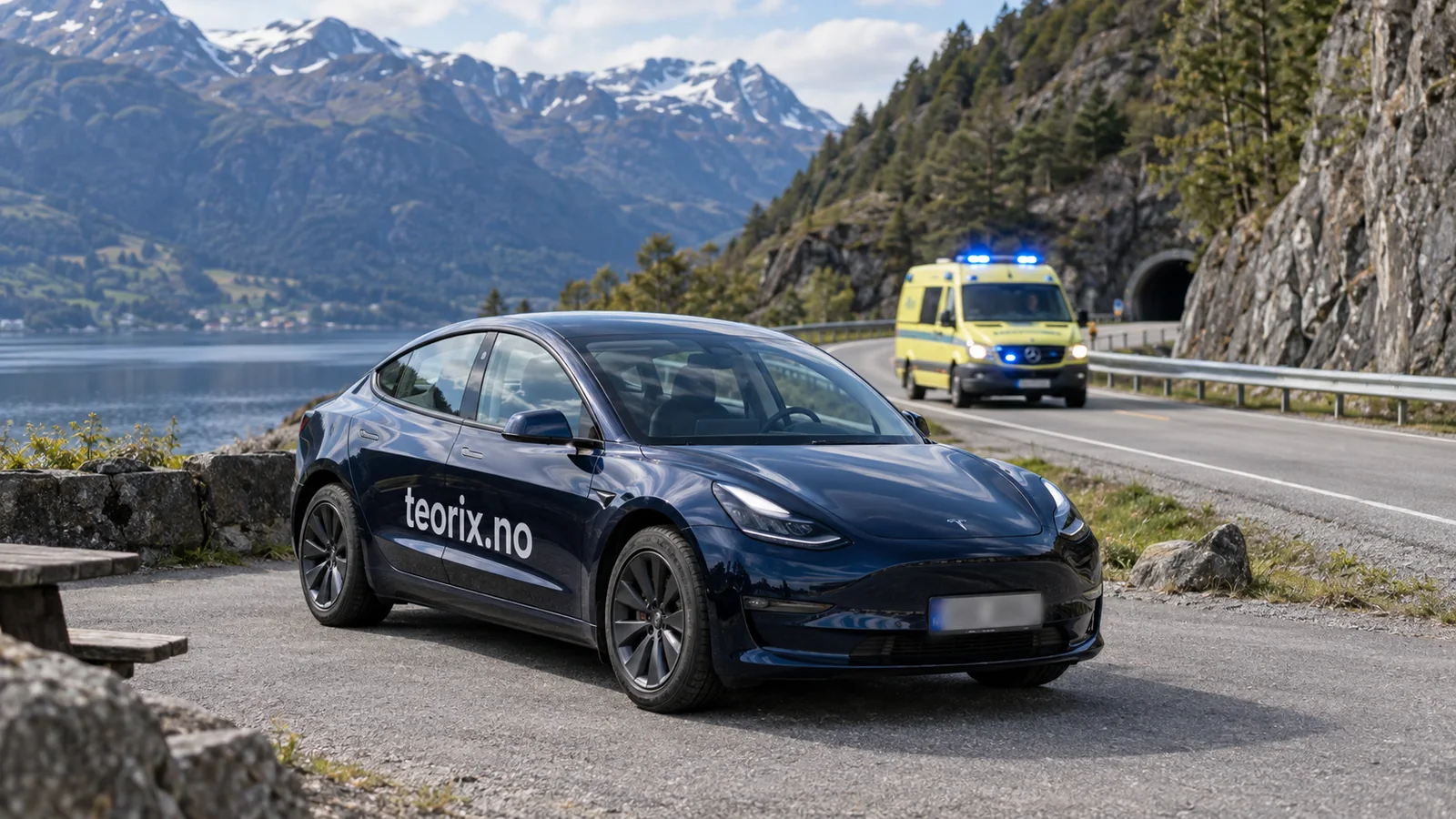
Recognise the request for a clear path
Under traffic rule § 10, give a clear path to an emergency vehicle signalling with flashing blue lights, stopping if necessary.
A siren may supplement the lights; silence does not cancel the blue-light signal. If you hear a siren, locate it and assess the traffic first. Amber lights on road machinery warn of danger rather than giving the same entitlement to a clear path.
Look before moving
- Check mirrors and the area around the car: the emergency vehicle may approach from behind, ahead or across your route.
- Slow smoothly, signal and choose a position that genuinely creates space.
- Do not brake sharply or change lanes blindly.
- “Always move as far right as possible” cannot replace checking cyclists, pedestrians, the road edge and the vehicle’s chosen route.
When to stop
Stop if that is needed to provide a safe, clear passage.
Where possible, avoid blocking a narrow section, bend or the remaining gap opposite an oncoming vehicle. Do not accelerate to keep escaping from an ambulance. The aim is a predictable action and usable space, not racing the traffic.
Queues and red lights
Leave room to adjust your position when joining a queue.
Blue lights behind you are not permission to drive yourself through a red junction or force a pedestrian off a crossing. Create space with a safe, permitted manoeuvre. Direct instructions from an authorised traffic controller are a different situation covered by § 3; follow those instructions.
After it passes
- Check for another emergency vehicle before moving.
- Do not follow closely to exploit the cleared space.
- Check the adjacent lane and pedestrians before returning smoothly to traffic with appropriate signals.
- The same principles apply in tunnels and narrow roads: awareness, predictability and a safe clear path.
A practical example
An ambulance is approaching from behind and there is a safe wider section ahead on the right.
Check mirrors and the blind spot, signal, move smoothly to create passage and stop if necessary. If a cyclist is beside you, account for them first. Making way for an emergency vehicle must not create another collision.