What safe transport means
An animal must not roam around the cabin, interfere with driving or create danger during braking.
Statens vegvesen explicitly warns against travelling with a loose dog. Avoid reducing this to “every animal is legally just cargo”: traffic safety and suitable conditions for the animal both matter. This guide concerns ordinary private pet travel, not commercial animal transport.
A crate or a vehicle harness
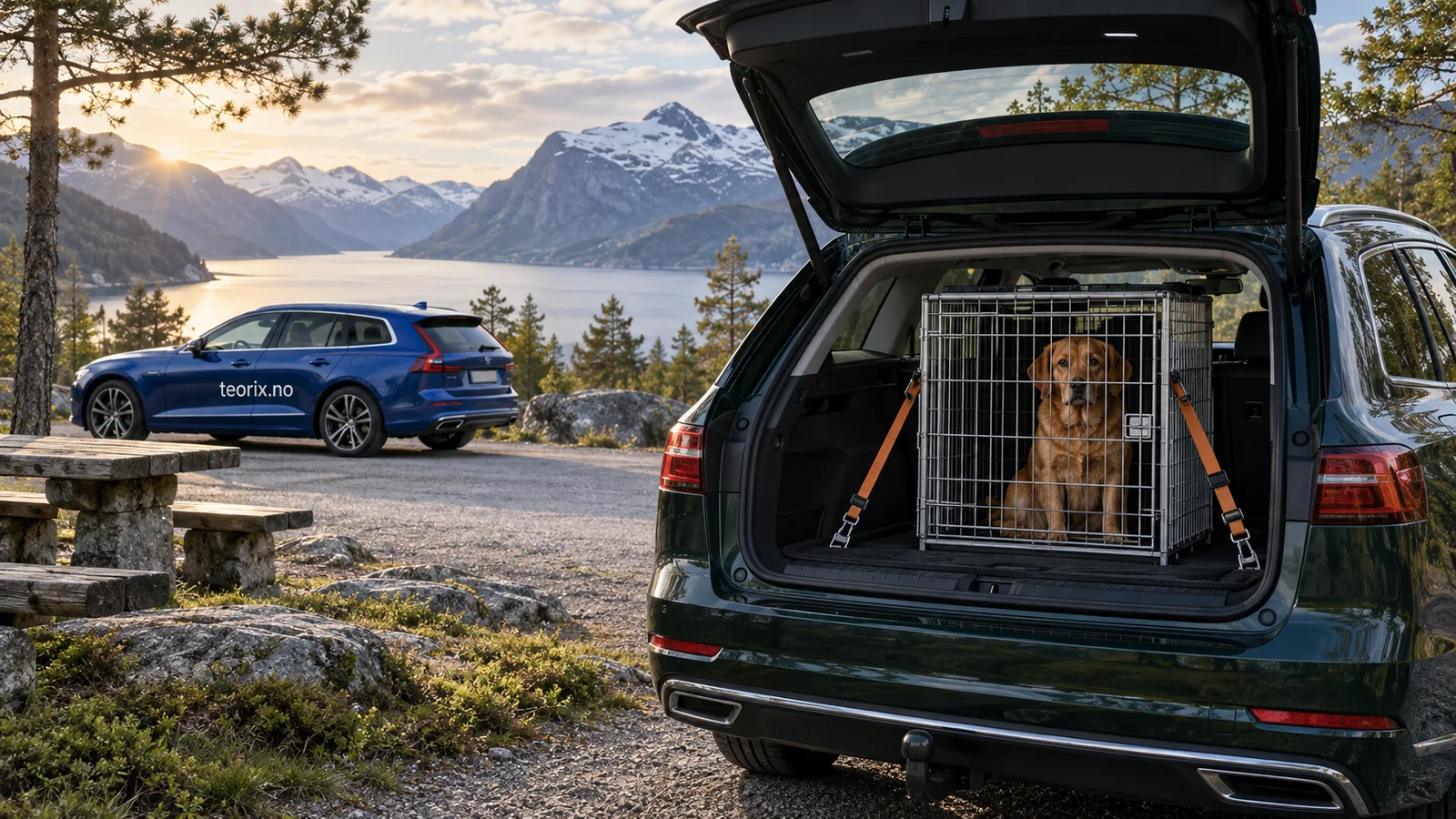
SVV recommends a transport crate or harness designed for dogs travelling in cars.
Choose for the animal’s size, installation method and vehicle compatibility. A “travel” label alone does not demonstrate crash protection. An ordinary collar and lead should not replace a purpose-designed car restraint. Follow the manufacturer’s instructions rather than improvising anchor points.
Secure the crate too
- A loose crate can move as well.
- SVV recommends fastening it in the luggage area against the rear seat back.
- Follow the specific product and vehicle fitting instructions; never put the animal in a separate enclosed saloon boot.
- Secure nearby heavy luggage and preserve ventilation.
- No installation method should be called universally safest regardless of design.
Plan the journey
- Introduce the travel position through short, calm trips.
- Plan breaks, water and temperature checks; these are practical recommendations, not an invented mandatory timetable.
- A partly open window does not make a parked car safe in heat.
- Consult a vet about illness or severe travel stress rather than choosing sedatives yourself.
Stopping and getting out
- Park somewhere safe.
- Have a lead or carrier ready before opening the door so the animal cannot escape into traffic.
- Do not release it onto the roadway or feed it while driving.
- Stop first when it needs attention.
- After a break, check the restraints and luggage again.
Ferries, borders and special transport
Check the operator’s rules before boarding: access to the car may be closed during a crossing, and pet arrangements vary.
International journeys require separate checks of documents and animal-health rules. Restraints do not replace these. Horses, livestock and commercial transport have different requirements; do not apply this household checklist as their complete rulebook.