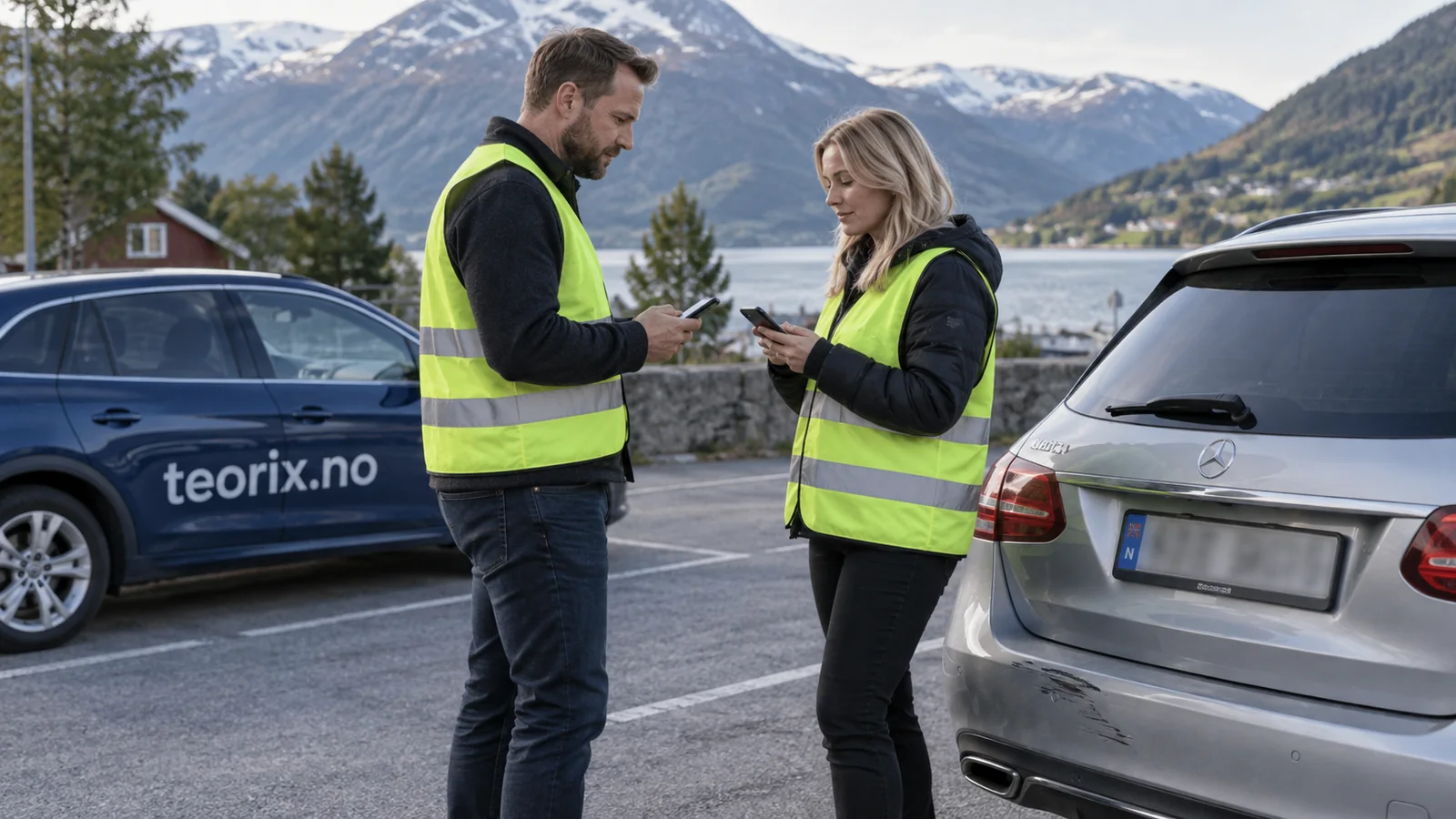
Stop and assess danger
If involved in a collision, stop regardless of whom you consider at fault.
Do not begin with an argument or photographs. Assess traffic, visibility, smoke and vehicle positions. If first to arrive, help within your capabilities without creating additional casualties.
Make the scene safer
- Use hazard lights, put on a reflective vest before getting out and warn approaching drivers when safe.
- Move a vehicle only with regard to conditions and safety; follow instructions from attending services.
- Do not stand between damaged vehicles and passing traffic.
- A triangle provides early warning, not a reason to risk yourself to achieve a formal distance.
Call for help
- Call 113 for injuries or a serious accident.
- Give the road, direction, nearby landmark, number of vehicles and people, and visible hazards.
- If you do not know the exact location, say so rather than inventing an address.
- Answer the operator’s questions and follow instructions.
- With several helpers, assign the call to a specific person while another handles scene safety.
Help as directed
Provide the assistance you can safely give, following the operator’s guidance.
This article does not replace a first-aid course or provide a short-form medical protocol. Do not delay calling while trying to diagnose injuries yourself. Remain available to responders and report changes in the situation.
Property damage only
- First establish that there are no injuries or immediate dangers.
- Then exchange contact and vehicle details, record the circumstances and damage if safe, and contact the insurer.
- Do not argue about liability in the road.
- Ask police when duties are unclear, an affected property owner is absent or a conflict arises.
- An absent owner is not permission to leave without reporting.
Before leaving
Do not leave a serious collision where police are expected without necessity and coordination with the responsible services.
Check whether the damaged car can safely be used: wheel, brake or light damage and leaks need assessment rather than an attempt to limp home. Arrange recovery from a safe place when needed. Paperwork and photographs follow urgent safety actions.