Start with height and weight
For an ordinary journey in a passenger car, a child below 135 cm needs approved restraint equipment suitable for their height and weight.
Between 135 and 150 cm, use suitable approved equipment if it is available in the car. Measure the child and check the specific seat’s range rather than relying on an age label. The driver is responsible for securing passengers under 15.
Approval is not universal compatibility
- Statens vegvesen lists ECE R44.03, R44.04 and R129 for seats in use.
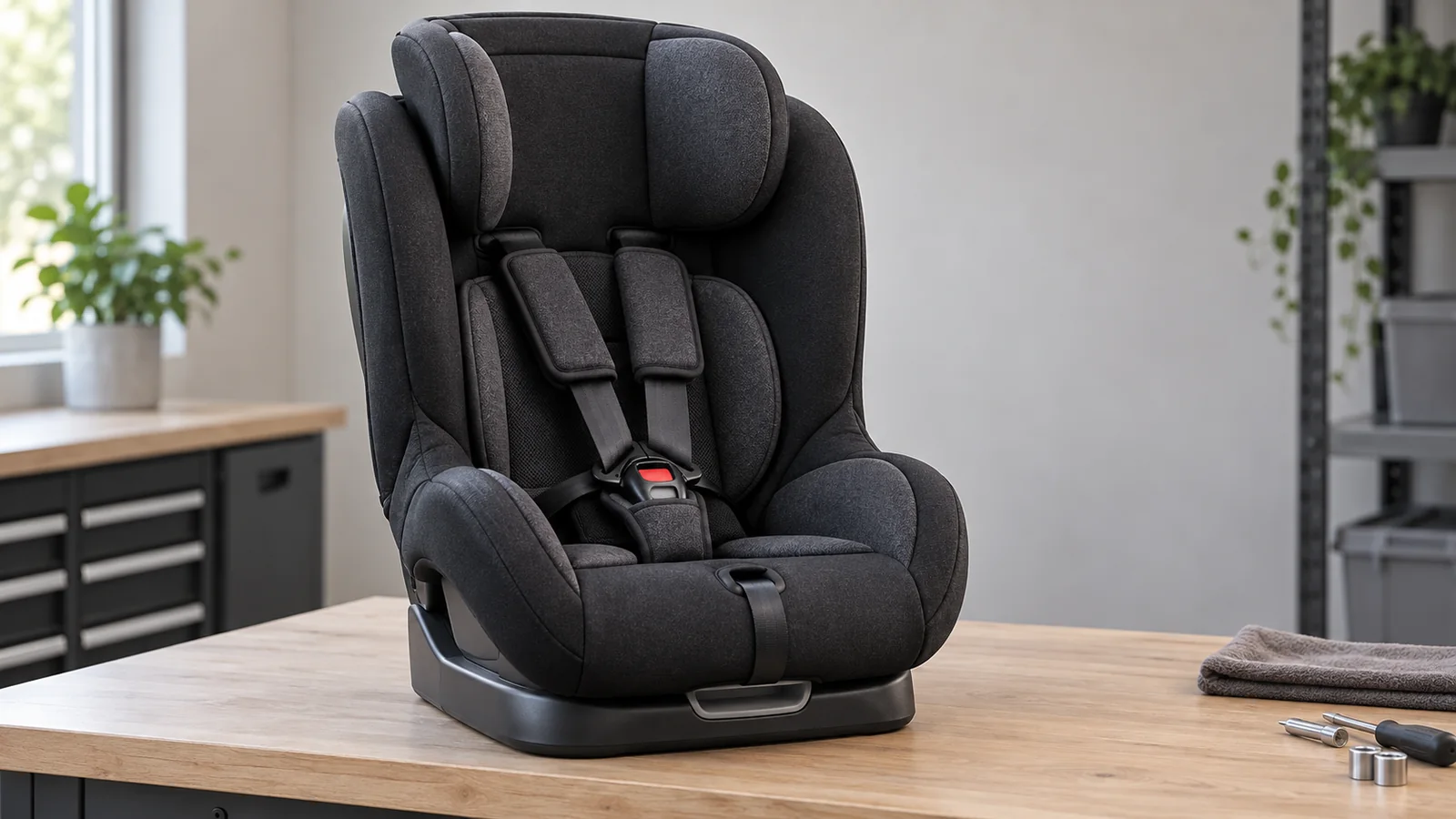
- Check the approval label, instructions and compatibility with the chosen vehicle seating position.
- Approval does not permit every installation method or orientation.
- Follow the seat and vehicle manuals together, respecting the height, weight and fitting limits at the same time.
Rear-facing: minimum and recommendation
R129 requires rear-facing travel until 15 months; that is not an instruction to turn the seat around immediately afterwards.
Statens vegvesen recommends rear-facing travel for as long as possible, preferably until at least four years, within the seat’s limits. Keep the standard’s minimum separate from the safety recommendation. Another family moving to a different restraint is not evidence that your child is ready.
The front seat and airbag
A rear-facing child seat must not be placed in front of an active passenger frontal airbag.
Verify the manufacturer’s deactivation method and indicator instead of assuming automatic seat detection. SVV also advises against seating children below 140 cm in front of an active airbag. That is a separate recommendation, not the identical legal prohibition. If unsure, use a compatible rear seating position.
Check every journey
- Install the seat according to both manuals.
- Check the connectors, belt route and tension, and any required support or additional anchorage.
- Keep the belt close to the body without twists; bulky clothing must not create slack.
- The child needs to remain correctly restrained throughout the journey.
- After a collision, follow SVV’s advice to replace the seat even if it looks undamaged.
Plan short trips too
Arrange an appropriate restraint even for a nearby destination, a relative’s car or a rental.
Cars without seat belts have separate restrictions: children under three cannot travel in them, and children aged three or over who are below 150 cm must not use the front seat. These exceptional circumstances are not a shortcut around safe ordinary transport. Check the applicable provisions separately for buses, taxis or other special circumstances.